← All research
Research programme 01
p53 and transposon suppression
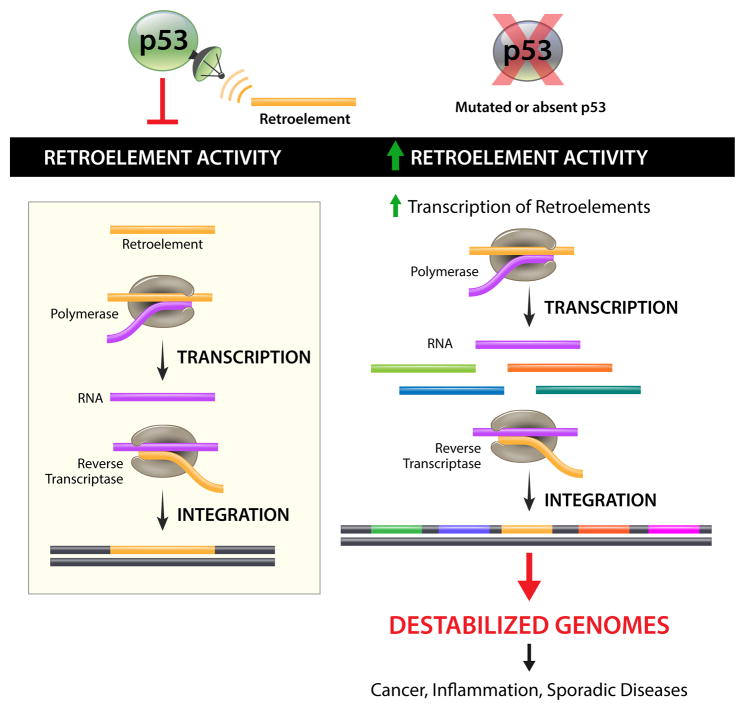
We investigate how p53 restrains retrotransposons—mobile genetic elements that threaten genome stability and are deregulated in disease.
Retrotransposons can copy and insert themselves across the genome, creating mutations and genomic stress. Using Drosophila germline models, the laboratory studies a conserved p53-dependent defence that limits this activity.
Patterns of transposon deregulation in p53-deficient mouse and human cancers support a broader disease connection. The programme asks how this defence works, which mobile elements are controlled, and whether loss of constraint helps initiate or accelerate tumorigenesis.