← All research
Research programme 02
Opposing transcriptional outcomes
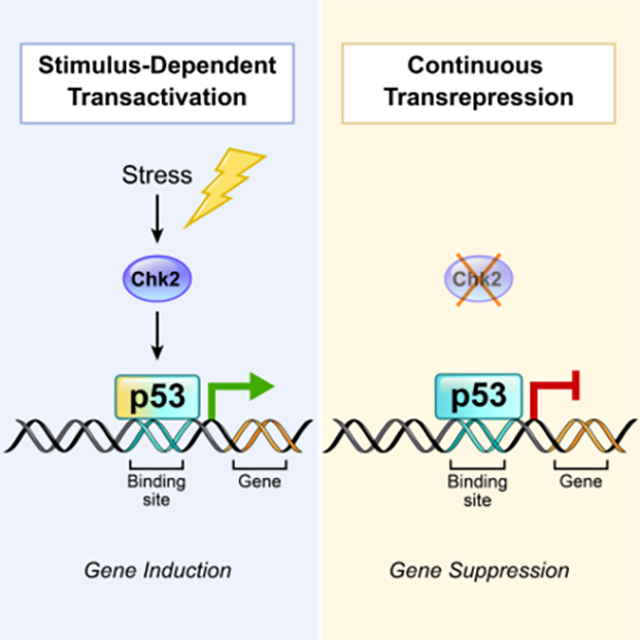
We study how p53 can directly activate or repress genes through the same canonical response elements in different tissues and developmental states.
p53 is commonly described as a stress-induced transcriptional activator. The laboratory's work established that p53 can also function as a constitutive, tissue-specific repressor through canonical binding sites that act as activation elements at other developmental stages.
This programme dissects how chromatin state, cellular context and p53 protein composition determine whether a target is activated or repressed.